Foundation Signs, Read From the Outside of the House In
Foundation warning signs are easier to judge in order: the yard and outside walls first, then the basement, then the rooms upstairs. Every answer below opens with the likely cause, then says how urgent it is and links to the repair page.
Horizontal cracking in block points to pressure from wet or frozen soil; spring water at the floor joint points to groundwater; a stair-step crack that widens upward points to settling. HomeGuide's 2025 bowing-wall guide moves walls leaning 2 inches or more from anchors and straps to tiebacks or straightening.
Outside: soil slopes toward the house and snow piles against it. Does that matter?
Yes, it is the cheapest problem to fix and often the first cause. Water from the roof and melting snow soaks the ground right beside the wall, adding pressure and feeding leaks. Regrade so soil falls away from the house, extend downspouts and keep shoveled snow off the foundation before paying for anything bigger.
Outside: stair-step cracks in brick near a corner. Is the house settling?
Often, yes. A crack that steps through mortar joints and is wider at the top than the bottom suggests the corner beneath it has dropped. Measure it and check after the next thaw. If it widens, or doors nearby stick, have it looked at. See settling corners and floors.
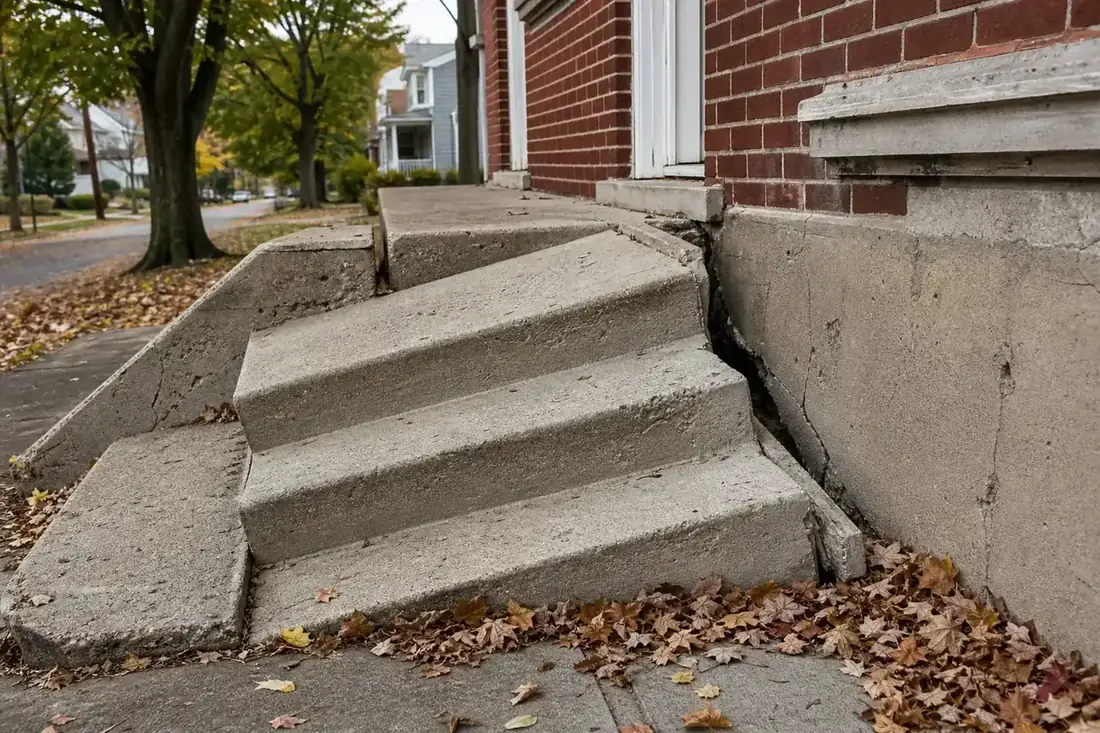
Outside: the porch or front steps pulled away from the wall. Why?
Porches and stoops often sit on shallower footings than the house, so they sink on soft ground or heave with frost. A gap that opens in winter and closes in spring is frost; one that only grows is settling. Neither usually threatens the house itself, but water entering the gap can reach the basement.
Basement: a horizontal crack runs along the block wall. How serious?
Treat it as structural until measured. A horizontal crack a few courses down usually means pressure from wet or frozen soil outside. Get it checked soon if the wall is visibly out of plumb, a block has slid inward, or the gap has opened since you last measured it. See cracked and bowing block walls.
Basement: water along the floor edge every March. Is that the foundation?
It is usually groundwater, not a structural failure. Water rising where the wall meets the floor during the melt points to a high seasonal water table pressing under and beside the basement. The usual fix is drainage, not bracing. See basement waterproofing.
Basement: white powder on the block. Is that damage?
It is efflorescence: minerals left behind as water passes through masonry and evaporates. The powder itself is harmless and brushes off, but it shows the wall is getting wet from outside. Note where it forms; a band near the floor and fresh powder each spring both point to groundwater.
Upstairs: doors stick and drywall cracks over the frames. What now?
Seasonal sticking that comes and goes with humidity is common in older houses. Cracks that run diagonally from door and window corners and keep growing, especially on one side of the house, suggest the foundation below that side is moving. Check the basement wall under those rooms.
Upstairs: a floor slopes toward the middle of the house. Foundation or framing?
In many older houses it is the center beam or its posts, not the outer walls. Look in the basement for a post that leans, sits on a cracked floor or has been shimmed. That is usually a smaller job than a foundation repair, but it still needs a specialist's eye.
What is the house doing?
A crack you keep checking, water along the floor after the snow melts, a porch pulling away: one or two sentences is plenty. It goes to one independent foundation and waterproofing specialist who works in South Bend.