Basement Waterproofing in South Bend: Snowmelt, Groundwater and the Fixes
Basement waterproofing in South Bend starts with one question: is the water coming from the roof and yard, or from the ground itself? In a city that averages 64.5 inches of snow a year (NOAA) and sits partly on low, wet soils, the answer is often both, and the cheapest fixes go first.
Angi's 2026 data puts basement waterproofing at $2,461–$8,207, averaging $5,247: interior systems average about $3,000 and exterior work about $7,000. An interior perimeter drain runs $60–$120 a foot and a sump pump $1,200–$2,500, while regrading a yard costs $500–$3,000.
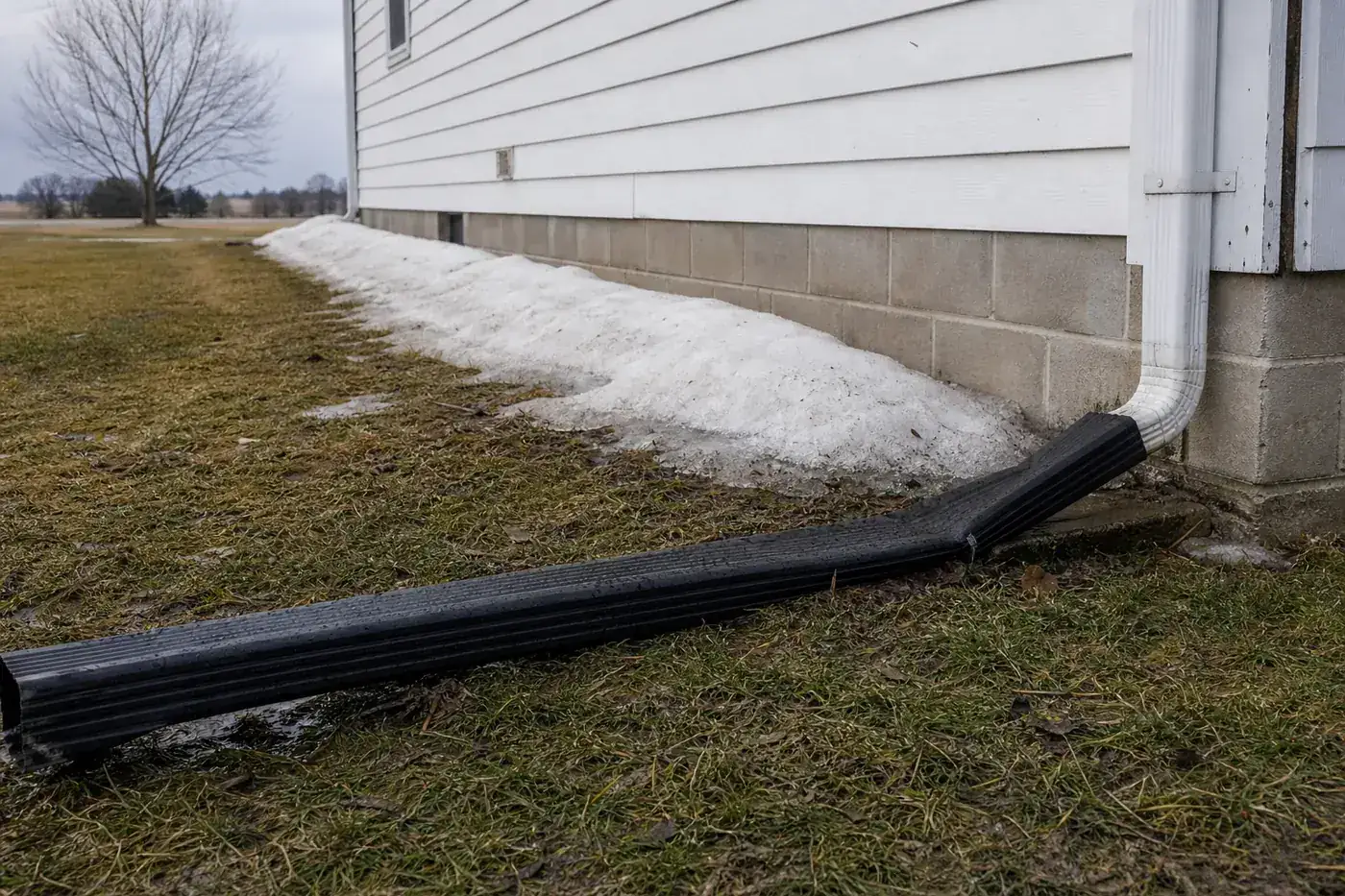
Where is the water in a South Bend basement coming from?
- Roof and yard water: downspouts emptying at the wall, soil that slopes toward the house, snow shoveled against the foundation. Water shows up soon after a storm or a warm spell.
- Groundwater: the water table rising in late winter and spring. Water seeps where the wall meets the floor, or up through floor cracks, days after the melt starts.
- Cracks: one leaking line in a poured wall, or wet mortar joints in block.
- The floor drain: water rising from the drain itself is a plumbing or sewer question, not a wall question.
What to try before a waterproofing contract
Extend every downspout well away from the house, ideally to a spot that drains away, and keep snow piles off the foundation. Rebuild the soil so it falls away from the walls. Angi's 2026 figures put yard regrading at $500–$3,000 and buried downspout lines at $200–$2,000. On higher, sandy lots these steps sometimes end the problem, because the soil drains quickly once roof water stops pooling against the wall.
Interior drain tile and a sump, or digging outside?
For groundwater, the common answer is an interior perimeter drain: a strip of floor is broken out around the basement edge, perforated pipe is bedded in stone beside the footing, and a sump pit collects the water for a pump to send outside. Indiana's code, for new homes on all but the best-draining sand and gravel soils (the code's Group I), calls for a sump pit 18 inches wide or more and sunk at least 24 inches beneath the floor slab, a useful size to hold an existing pit against. Exterior work, digging down to the footing and membraning the wall, stops water before it enters and lets a block wall be repaired at the same time, but costs more and is harder in winter. Compare both on the South Bend cost page.
After a storm, and the paperwork that follows
FEMA records three federal declarations for St. Joseph County from 2016 through 2026, two of them for flooding, the latest an emergency declaration on August 15, 2026, for severe storms and flooding. After any flood, photograph the water line before cleaning up and keep receipts. Put the waterproofing contract in writing, as Indiana requires above $150, with the warranty terms spelled out.
Questions homeowners ask
Is a dehumidifier enough for a damp South Bend basement?
For dampness without standing water, often yes: it controls the musty smell and condensation on cool walls in summer. It will not stop water coming through a crack or up at the floor joint in spring. If you see water, find the source; if you only smell damp, a dehumidifier and better downspouts are a reasonable first step.
What is the house doing?
A crack you keep checking, water along the floor after the snow melts, a porch pulling away: one or two sentences is plenty. It goes to one independent foundation and waterproofing specialist who works in South Bend.