Bowing and Cracked Block Walls in South Bend Basements
Bowing basement wall repair in South Bend usually means hollow block that has split along a mortar joint partway down the wall, or stair-step cracks running toward a corner. Something outside is pushing: soil that is saturated, frozen or both, often helped by a downspout emptying beside the wall. Which repair fits comes down to two measurements: inches of lean, and feet of clear yard beside the wall.
Walls leaning in less than 2 inches are usually held with anchors at $80–$150 a foot or straps at $85–$280 a foot (HomeGuide, 2025). Past 2 inches, the guide's options are tiebacks at $300–$360 a foot or digging out and straightening at $340–$550. Angi (2026) puts a whole bowing-wall job at $4,000–$12,000.
What pushes a South Bend block wall inward?
Water and frost more than the soil itself. Clean sand presses far less on a wall than wet clay, but South Bend's sand often sits on clay or till, and water draining down through it can pool against the lower courses. USDA soil records for Crosier soil, a common St. Joseph County type, describe a perched water table as shallow as half a foot below the surface in normal years. In winter the wet soil near the top of the wall freezes and expands; Indiana sets the county's frost depth at 36 inches. A hollow block wall bends at its weakest line, a mortar joint, so the first sign is a horizontal crack a few courses down.
Bowing basement wall repair methods, side by side
- Wall anchors: plates inside, connected by steel rods to anchors buried in the yard. They can be tightened over several seasons. They need open, undisturbed soil outside the wall.
- Carbon fiber or steel straps: fixed to the inside face, floor to joists. Quick and tidy, but they hold the wall where it is.
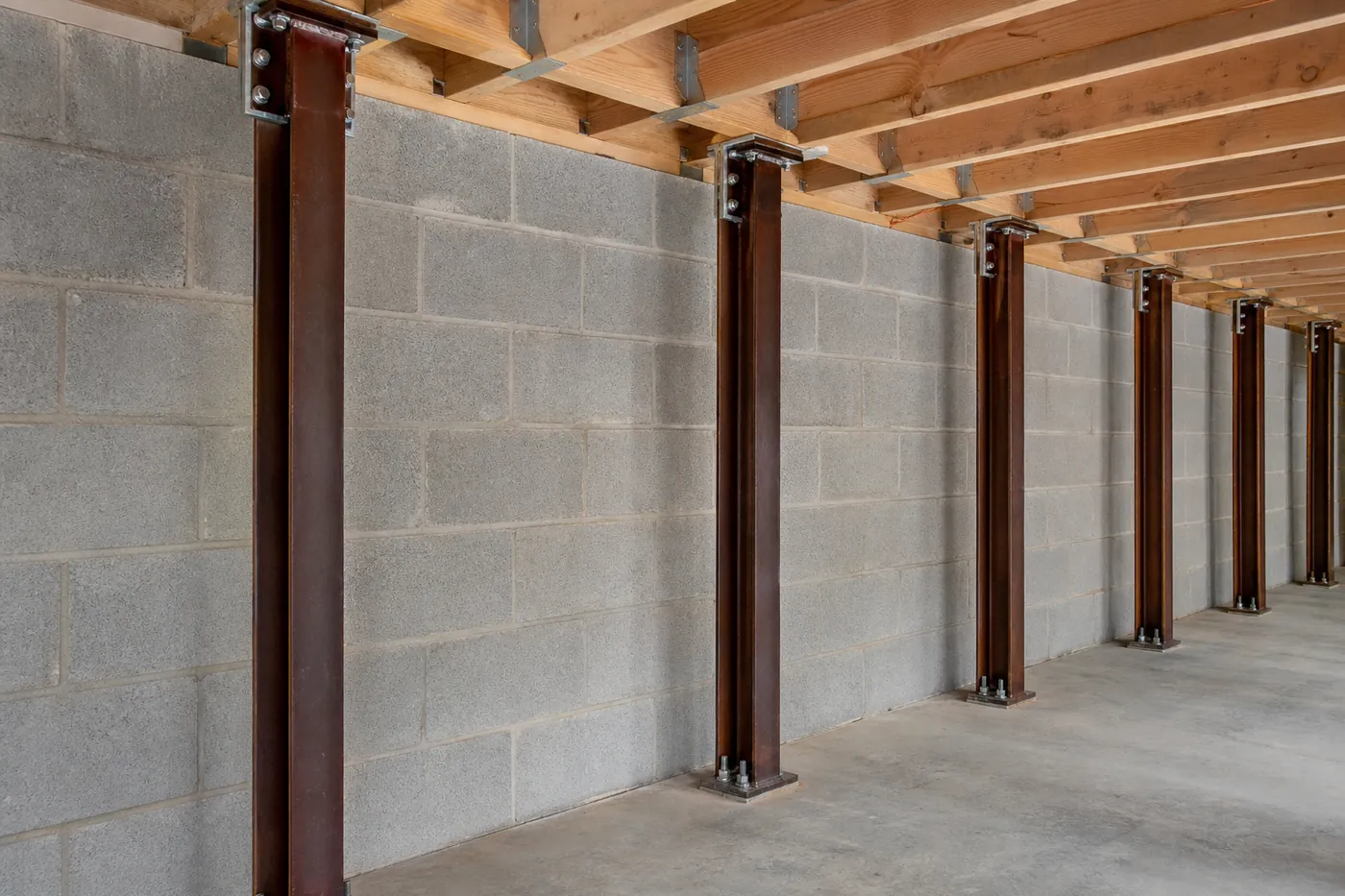
- Steel I-beam braces: vertical beams bolted to the floor and the framing above, the most visible option and one that suits a wall with no room outside.
- Helical tiebacks: screwed out through the wall into firm soil, for heavier bowing.
- Dig out and rebuild: soil comes away from the outside face so the wall can be pushed back or relaid, with a membrane added while it is exposed.
Compare dated prices on the South Bend foundation repair cost page.
How can you tell whether the wall is still moving?
Measure it. Stretch a string or hang a plumb line at the worst spot and note the gap at the top, middle and bottom, with the date. Mark both ends of each crack in pencil. Check again after the thaw and again in late summer. A wall that has not changed through one full winter is a different job from one that gained a quarter inch since January, and a specialist will want those numbers.
Registration, permits and a written contract
Anyone you hire for structural work in South Bend should be registered with the joint St. Joseph County and City of South Bend Building Department, which requires a $5,000 surety bond and proof of workers' compensation. Ask the department whether your wall repair needs a permit, and expect the contractor to buy it if it does. Under Indiana law, home improvement work priced above $150 needs a written contract; see Indiana hiring rules.
Questions homeowners ask
Can a bowed block wall be pushed back straight?
Only some methods move it back. Anchor rods can be tightened a little each season as the soil allows, and a wall that is dug out can be pushed back or relaid course by course. Straps and steel braces are built to stop further movement, not to undo what happened. Ask whether a proposal aims to hold the wall or to straighten it.
What is the house doing?
A crack you keep checking, water along the floor after the snow melts, a porch pulling away: one or two sentences is plenty. It goes to one independent foundation and waterproofing specialist who works in South Bend.